

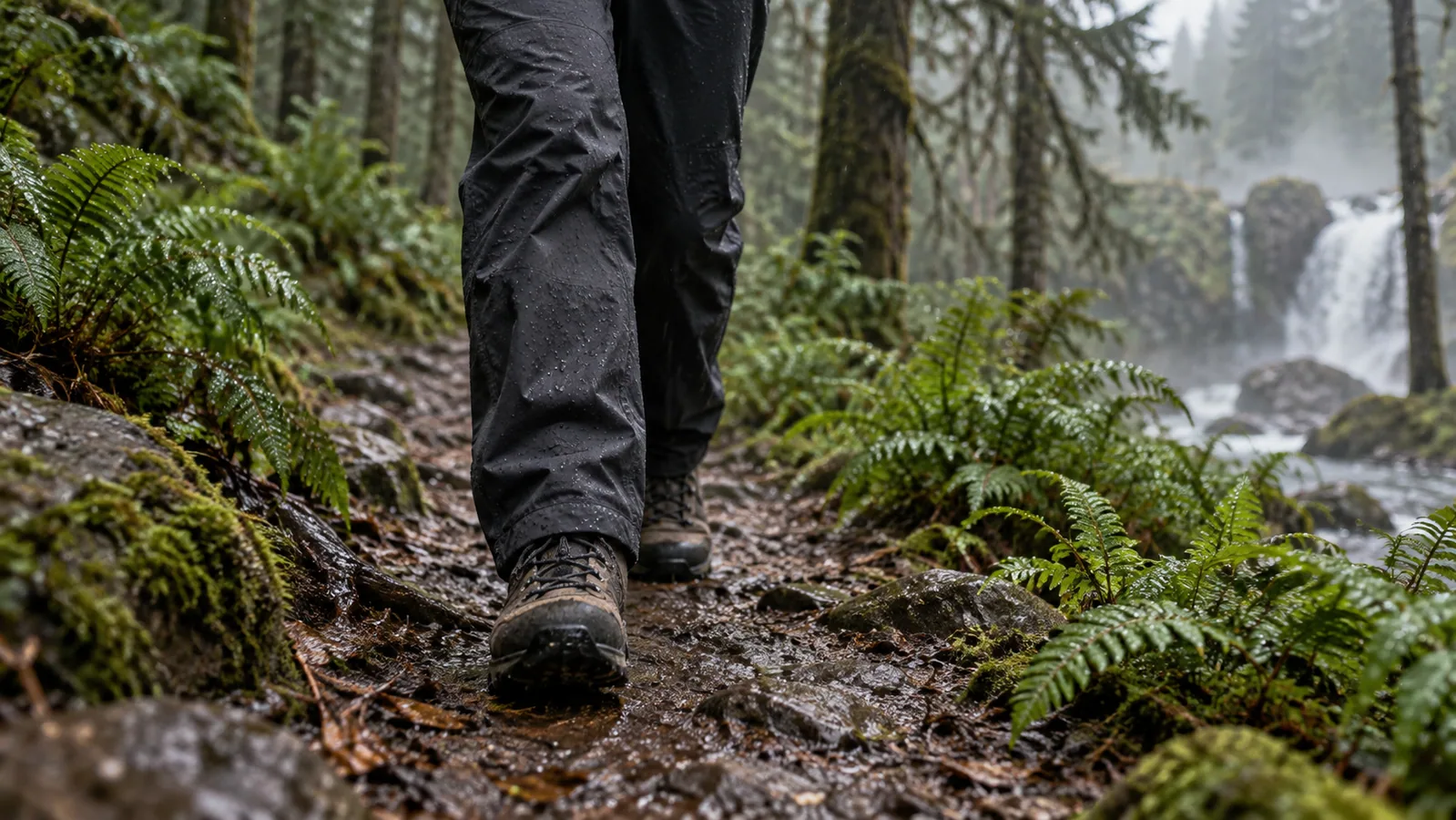
Rain pants have one awkward job: keep water out while you walk hard enough to sweat. A sealed shell can handle the first part. Fit, vents, and your pace help with the second. I would rather have a pair I can pull on fast than a clever fabric I leave buried in my pack.
For most day hikes, I would begin with the REI Rainier. Full side zips make it easier to get the shell over hiking boots, and the price leaves room in the budget for other gear. The Foray 3L is a stronger choice if stretch matters. The lightest pairs suit a different plan, where the pants spend much of the trip packed away.
These are rain shells to wear over shorts, a base layer, or hiking pants. Ordinary water resistant hiking pants serve a different purpose. They can shed a brief shower, but I would not treat that finish as protection from hours of rain.
Which rain pants suit your wet weather plans?
| Rain pants | Best reason to buy |
|---|---|
| REI Co-op Rainier | Full side zips at a fair price |
| Outdoor Research Foray 3L | Stretch for frequent wet hikes |
| Patagonia Torrentshell 3L | A simple three-layer shell |
| REI Co-op Trailmade | A lower-cost pair for occasional rain |
| Outdoor Research Helium UL | Light rain pants with ankle zips |
| Zpacks Vertice | The smallest listed carry weight here |
| Marmot PreCip Eco Full-Zip, Long | Full zips and a 34-inch inseam |
The weights and lengths below refer to the linked men's models. Check the size chart for the exact cut you buy. A shell that fits over your layers is more useful than a label that matches the pants in your drawer.
1. REI Co-op Rainier: the best rain pants for most walkers

Full side zips make a clear difference
The REI Co-op Rainier Rain Pants have full-length outer-leg zips. I put a lot of value on that. When the rain starts, you can open the legs wide instead of pushing muddy boots through a narrow cuff.
These rain pants use 2.5-layer HydroWall fabric with sealed seams. An elastic waistband with a drawcord and adjustable ankle cuffs let you adjust the fit, while zippered pockets hold small items. REI lists the men's pair at 12 ounces and $99.95.
Choose the inseam as well as the waist
Short, regular, and tall versions give more room to get the length right. I would check the hem with boots on and one knee raised. It should cover the top of the boot without sliding under the heel.
For a shell I expect to wear often, that fit choice matters more to me than saving one or two ounces. Long, loose hems are a nuisance on muddy trails.
Learn the cuff adjustment at home
One REI reviewer praised the roomy fit but found the cuff cords awkward. That reviewer received a free pair, so I would treat it as a useful fit detail, not a broad verdict. It is still a good reason to try the controls before the first wet hike.
Who should buy these rain pants?
I would choose them for day hikes, travel, and mixed-weather trips where easy changes matter. I would choose a lighter pair if the main goal is a small emergency shell for long miles.
The Rainier is my first pick for walkers who value easy on and off over the lowest possible pack weight.
Reasons to buy: Full-length side zips; Short, regular, and tall inseams.
Keep in mind: Twelve-ounce listed weight is above the ultralight choices.
2. Outdoor Research Foray 3L: sturdy rain pants with stretch

A three-layer shell with stretch
The Outdoor Research Foray 3L uses 40D recycled nylon with mechanical stretch. Shaped knees and a gusset help the cut move with you. I would put those features to work on trails with high steps and lots of bending.
Three-quarter side zips open the legs for changes over footwear. The back pocket doubles as a stuff sack. Outdoor Research lists this pair at 13.58 ounces, or 385 grams, and $210.
The weight makes more sense when you wear them
This is the heaviest listed pair in the group. I would accept that on a trip where the rain pants stay on for much of the day. I would be less keen if they were only a backup for a mostly dry route.
A pair worn through hours of wet brush earns its pack space in a different way from a shell that comes out for ten minutes. Buy for the likely use, not the most dramatic trip you can imagine.
Match the room to your layers
Try the Foray 3L with the hiking pants or base layer you will wear below it. Step onto a bench, bend down, and sit. Stretch helps, but it cannot fix a waistband that is too tight or legs that are too short.
My view of the trade-off
I like the Foray for frequent wet-weather use. For a casual walker, the Rainier's lower price is hard to ignore. For someone who wants the lightest backup pair, the Helium UL is the more relevant Outdoor Research choice.
I would choose the Foray 3L for frequent wet hikes where freedom to step and bend is worth extra pack weight.
Reasons to buy: Mechanical stretch and shaped knees; Three-quarter side zips.
Keep in mind: Heaviest listed men's pair in this group.
3. Patagonia Torrentshell 3L: versatile rain pants for regular use

Useful vents without a long feature list
The Patagonia Torrentshell 3L Rain Pants use a three-layer H2No shell. Two-way side zips run from the cuffs to the thighs. I like that they serve both as openings for boots and as vents when conditions allow.
The men's pair is listed at 11.8 ounces and $139. Partly elastic cuffs adjust with snap tabs. The regular inseam is 32.5 inches, with a 30-inch version also offered.
Think through pocket access
The hand pockets have their own mesh bags. A verified reviewer on Patagonia's site points out that they do not give direct access to the pockets in the pants below. I would move my phone or map before the rain starts.
That is a small thing until your rain jacket and pack belt are on. I prefer to settle those details in the house, with all the layers worn together.
Who is this shell for?
I would choose Patagonia Torrentshell 3L for a regular hiking shell with a fairly simple design. It sits between the very light pairs and the heavier Foray in listed weight.
I would still compare fit in person if possible. Rain pants are not a place to buy a familiar clothing size on faith. You need space to walk, climb steps, and add a layer without stretching the seams tight.
I like the Torrentshell 3L for a clear mix of weather coverage, useful vents, and an uncomplicated fit.
Reasons to buy: Two-way side zips reach the thighs; Three-layer construction.
Keep in mind: No direct pass-through to pockets in the pants underneath.
4. REI Trailmade Rain Pants: the best rain pants on a tight budget

Less to spend for occasional wet walks
The current REI Trailmade Rain Pants are listed from $69.95 to $79.95, depending on the version. They use a 2.5-layer polyester shell with sealed seams. The listed men's weight is 9.5 ounces.
Eleven-inch ankle zips help you get them over footwear. Snap tabs adjust the cuffs. The Trailmade pants also have an elastic waistband with a drawcord and a back zip pocket.
Short zips mean less opening room
I would try the cuffs over the exact hiking boots I plan to use. Short ankle zips may be enough for low hiking shoes but less easy with wide, muddy boots.
If I expected to put rain pants on and take them off several times a day, I would pay more for full side zips. For a simple backup pair on occasional day hikes, the Trailmade makes a stronger case.
Get the current model details right
Older Trailmade rain pants used a lighter nylon shell. The current linked pair uses polyester. Check the product number if you are comparing sale stock, used gear, and new listings.
I would not pay extra for the newer label alone. I would buy the pair that fits, has sound seams, and suits the planned use. Just compare the right specifications.
I would buy the Trailmade for occasional wet walks when the lower price matters more than full side zips.
Reasons to buy: Lower starting price; Choice of inseam lengths.
Keep in mind: Ankle zips offer less opening space than full side zips.
5. Outdoor Research Helium UL: a light pair with useful details

Ultralight rain pants with ankle zips
The current Outdoor Research Helium UL Pant uses a 15D nylon shell with Toray Dermizax 2.75-layer fabric. The men's listed weight is 5.75 ounces, or 163 grams.
Ankle zips, elastic cuffs, and lace loops give it more detail than a plain pull-on shell. The back pocket doubles as a stuff sack. The listed price is $170.
A small backup, with care
I would choose Helium UL for a trip where rain is possible but long hours in rough brush are not the plan. Thin fabric packs well. I would take more care around thorns, sharp rock, and loose gear with metal edges.
The best ultralight rain pants should match the way you move. If your route means scrambling on your knees, I would look at a sturdier shell even if it weighs more.
Do not confuse it with the older Helium
Outdoor Research has changed the Helium rain pants. The current Outdoor Research Helium rain pants use different fabric from older Pertex versions. Old reviews can still help you think about fit, but they do not test this exact shell.
I would pick this pair when I want light rain gear with ankle zips and a pocket. The Zpacks pair goes further on low weight by keeping the design more spare.
The Helium UL is my choice when I want a small backup pair but still want ankle zips and a storage pocket.
Reasons to buy: Low listed weight; Back pocket doubles as a stuff sack.
Keep in mind: Thin fabric calls for care around sharp brush.
6. Zpacks Vertice: the smallest carry weight here

A very light pair for a clear purpose
The Zpacks Vertice Rain Pants have a listed weight of 2.5 ounces, or 72 grams. That is the lowest figure in this group. I would consider them for a clear trail where the rain shell needs to take up very little room.
The waist uses an adjustable cord. The pants roll small enough to secure with the waist elastic, so a separate stuff sack is not needed. The listed price is $159.
Fit them over what you will wear
Zpacks bases the overlayer fit on a hip measurement taken over clothes. I would follow that chart closely. The shell has to pass over your hips as well as sit at your waist.
With no long side zips, getting the pants over footwear needs more thought. I would test that move before a trip and decide whether the weight saving is worth the extra care.
Low weight is the reason to choose them
I would not buy Vertice for lots of pockets, a tough feel, or easy changes over large boots. I would buy them to keep rain protection in a small pack when every spare item has to justify its place.
For rough use, I would rather carry more fabric. For a light backpacking trip on open trails, this simple design deserves a close look.
I would choose Vertice for careful use on clear trails when pack space and weight matter more than pockets and long zips.
Reasons to buy: Lowest listed weight in this group; Small packed size.
Keep in mind: No long side zips for easy changes over boots.
7. Marmot PreCip Eco Full-Zip, Long: rain pants with extra length

A 34-inch inseam and full zips
The Marmot PreCip Eco Full-Zip Pants in Long offer a 34-inch inseam. Full side zips sit under storm flaps, and the shell uses seam-taped NanoPro recycled nylon.
You get front hand pockets and a back pocket, all zipped. Marmot lists this long version at about 12 ounces. I would put it beside the Rainier Tall when regular rain pants leave too much boot exposed.
Length needs to work with your stride
A longer inseam helps only if the waist and knees also sit in the right place. Raise a foot as though you are stepping onto a rock. Check whether the cuff still covers the boot without catching under the sole.
I would not buy a much larger waist just to gain length. Too much loose fabric creates a new problem while solving the old one.
Watch the exact version and stock
The linked pair is a seasonal Long model, so sizes may be limited. Confirm the inseam and full-zip design before buying a sale listing. Other PreCip pants can have different details.
This is a useful fit-based choice. I would choose it because the long cut works, rather than assume one brand's rain pants fit every tall walker.
I would check this long version when a 34-inch inseam and full side zips are priorities, provided the right size is still available.
Reasons to buy: Thirty-four-inch inseam; Full-length side zips.
Keep in mind: Seasonal stock and sizes may be limited.
Waterproof pants or water resistant hiking pants?
Water resistant and weather resistant are not waterproof
Many hiking pants have a durable water repellent finish, often called DWR. Water beads on the surface instead of soaking in at once. That can help in light rain, but it does not turn the pants into a waterproof shell.
For sustained rain, look for waterproof construction and sealed seams. I would carry a separate shell when the forecast and route call for one. Traditional hiking pants can stay more pleasant to wear during the dry parts of the day.
Softshell pants have a different strength
Softshell pants often favor stretch and air flow. That can be useful in cool, windy weather when sweat is the larger problem. I would check the actual waterproof claim before treating them as rain pants.
The best hiking pants for a dry climb may not be the best rain pants for an exposed walk in a storm. The label should follow the job.
Convertible pants do not solve heavy rain
Zip-off legs give you shorts when the day warms up. They do not add a rain barrier. I would choose convertible pants for comfort and flexibility, then make a separate decision about rain gear.
You can wear a shell over shorts if the fit and weather suit it. There is no rule that you must put thick hiking pants under every pair of waterproof pants.
Rain pants fabric: what the layers mean
These are parts of one fabric
A three-layer shell is not three pairs of pants worn at once. It bonds the outer fabric, waterproof membrane, and inner backing into one material. The backing helps protect the membrane from wear on the inside.
A 2.5-layer shell uses a lighter inner protective treatment. Both designs can keep rain out. I would compare the whole garment instead of using the layer count as a score.
Face fabric takes the knocks
The face fabric of your rain pants is the outside you can touch. Its fiber, weave, and thickness affect how the shell handles rough use. A lower denier number often points to finer yarn, but it is not a full durability test.
I would avoid calling any pair abrasion proof. Sharp rock can damage outdoor gear of many weights. Choose more protection for frequent rough contact and use care with all of it.
Seams and openings matter too
A waterproof fabric still needs sealed seams. Zips, cuffs, and the waist also create places where water can get in. Close them as designed when the weather calls for full coverage.
A long rain jacket should overlap the waistband of the rain pants. If water runs inside the top of the pants, a better fabric below cannot send it back out.
Breathable does not mean sweat-free
Breathable fabric still needs vents in humid weather
Waterproof rain pants let some sweat vapor escape, but it has limits. A steep climb can make moisture faster than the shell can pass it through. In warm, humid weather, that damp feeling can arrive fast.
I would slow down a little, wear fewer warm layers, or use vents when rain and wind allow. Buying a more costly shell would not be my first answer to wearing too much below it.
Use vents to dump excess heat
Long side zips can release heat, but an open zip can let rain in. Look at the direction of the rain before opening a leg. Small changes may give enough relief without exposing the whole side.
REI's explanation of how waterproof rain gear works helps put breathability claims in context. I would not compare numbers from different brands unless they use the same test.
Damp inside does not always mean a leak
Sweat, water at an opening, and a damaged seam can all leave wet clothes. I would look for the pattern. One damp line near a seam suggests a different check from a warm, clammy feel across both legs.
Do not assume your rain pants leak based on one wet walk. Clean the shell as directed, check the seams and closures, then assess it again in a simple setting.
Fit checks for hiking rain pants
Wear the full clothing setup
Put the rain pants over your usual hiking clothes. Add the rain jacket and pack. A waistband that feels fine on its own may bunch beneath a hip belt.
Check the fit with your phone or keys where you plan to carry them. A hard object in a tight pocket can become the most annoying part of the walk.
Take a high step
Lift each knee, step up, squat, and sit. The shell should move without pulling hard at the crotch or knees. If it does not, try another cut before a larger size.
More fabric around the waist may not add room where your stride needs it. I would rather find the right shape than keep tightening a loose waist cord.
Try the ankle zips over your boots
Use clean boots for the fit test. Open the cuffs fully and ease each foot through. Do not force a large boot against thin fabric.
If the move is awkward indoors, it is likely to be worse with wet hands outside. That is a good reason to choose full side zips for a pair you expect to use often.
Set the cuffs without trapping the cord
Adjustable ankle cuffs should sit clear of the ground and moving footwear parts. Adjustable ankle cuffs should also keep any loose cord, tab, or loop clear as you walk. Secure it as the maker directs.
I would set the length before leaving, then check it again after a few minutes on the trail. Fabric can settle once you move.
Reach what you need
Try to reach your map, phone, and snacks with the rain jacket closed and the pack on. If they are buried beneath two layers, move them before the weather turns.
I would not buy extra pockets just to avoid that small task. A clear place for each needed item works better than a dozen zips.
Choosing the best ultralight rain pants for your trip
Ask how much time they will spend packed
The best ultralight rain pants make sense when you need a small backup layer. They are less compelling if the route means days of pushing through rough, wet brush.
I would count likely wear time as well as miles. A pair worn all morning should earn its place through fit and ease of movement. A pair carried all week should also pack small.
Know which features you are giving up
Fewer zips, pockets, and reinforced areas can save weight. Those changes are neither good nor bad by themselves. They help only if you do not need the missing features.
My best ultralight rain pants choice would change with footwear. Low trail runners and a simple route make a pull-on shell more appealing. Large hiking boots make wide openings more useful.
Carry them where you can reach them
Packable rain pants should be near the top of the bag or in an easy outer pocket. Keep them away from sharp tools and loose metal edges.
A tiny stuff sack is useful only if the rain pants pack away without a fight. On a wet morning, a slightly looser bag may be worth the space.
The best rain pants depend on the whole trip
A wet day close to home
For a short walk with a clear way back, I value easy changes. A pair of rain pants with wide leg openings is less of a chore when a shower passes. The Rainier earns my first place here. It is also a useful pair to share between hiking trips and wet errands.
Choose hiking pants that feel good in the dry, then add the rain pants when needed. That two-part setup gives you more control than wearing a sealed shell from breakfast through a warm afternoon. Pack the shell where you can reach it.
Hours of heavy rain
In sustained rain, weather protection needs to work from waist to boot. A great rain jacket cannot cover a gap at the back of your rain pants. Try sitting, bending, and reaching while both are on. Check the overlap with the pack belt fastened.
I would favor a durable pair with useful vents for this job. Durable rain pants are still clothing, though. Sharp rock and snagged branches can tear even a thick face fabric. Treat claims that a shell is abrasion resistant as a guide to use, not a promise it cannot fail.
Warm summer rain
Warm weather hiking raises a harder question: how much cover do you need while moving? A rain kilt gives more air around the legs. Rain pants give more cover from wind and wet brush. Neither choice means you can ignore the route or a drop in temperature.
For warm weather near shelter, I would keep the layers below a pair of rain pants light. For a high, exposed route, I would still carry the rain gear the forecast calls for. Wet legs can feel far less pleasant once you stop making so much body heat.
A long backpacking trip
When a shell will spend days in the bag, a lightweight pair earns a close look. Outdoor Research Helium rain pants add ankle openings without much listed weight. Vertice keeps the design simpler. The best ultralight rain pants are the ones whose missing features you can live without.
On a backpacking trip with long wet sections, I would put less weight on the scale reading. Fully featured rain pants can be easier to wear for hours. Compare the rain pants alongside the rest of your hiking gear, including footwear, base layers, and the pack.
Before you replace your current rain pants
A worn durable water repellent coating can let the outside soak up water even when the inner rain barrier still works. That loss of surface water resistance needs a care check. It does not always call for a new pair of rain pants.
Look for worn seam tape, holes, and damaged closures too. A weather resistant finish cannot mend those faults. If the hiking rain pants still fit and the shell is sound, proper care may keep useful outdoor gear in service. Replace it when repair no longer makes sense.
When a rain kilt can make sense
More air, less lower-leg cover
A rain kilt wraps around the waist and covers the upper legs. The open bottom gives heat an easy path out. It also leaves more of your lower legs exposed.
I would consider a rain kilt for warm weather on a clear trail, when keeping my thighs dry matters more than full leg coverage. I would choose rain pants for cold, windy, or brushy conditions.
Wind changes the choice
A loose wrap can move in gusts. Check how a rain kilt stays closed and how much stride it allows. A design that feels fine standing still may open when you step high.
I would not choose a rain kilt for maximum protection on an exposed ridge. Full rain pants give more continuous coverage around the legs.
Think about the whole lower half
A rain kilt does not keep water out of your shoes. Neither do rain pants if water gets into the footwear from another route. Match your clothing plan to the temperature, trail, and length of the day.
For a warm summer shower close to the car, the trade may be easy. For cold weather far from shelter, I would take a more complete rain setup.
Rain pants, boots, and wet socks
Keep the cuff over the boot opening
Let the rain pants overlap the boot top rather than tuck inside it. Check the overlap when you step up. Short cuffs can expose the opening just when water is running down the leg.
Do not cinch so hard that the cuff pulls up with every step. The goal is coverage that stays in place as you walk.
Choose socks that fit the shoes
A thick sock may feel cozy at home but crowd a wet hiking shoe. I would leave enough room for my toes and avoid bunching at the heel.
My guide to hiking socks covers cushion, wool blends, and fit. Rain pants help from above, while a good sock and shoe fit make the walk itself more comfortable.
Bring dry layers for camp
Keep dry clothes away from the wet shell in your pack. A waterproof bag inside the main pack can protect the layers you want at night.
For a trip with a hanging sleep setup, my camping hammock guide covers tarp coverage and bottom insulation. Dry walking gear and a dry bed solve different parts of the same wet day.
Care for the shell you buy
Clean it before calling it worn out
Dirt and body oils can affect rainwear performance. Follow the care label for washing and drying. Do not add fabric softener or a treatment the maker does not allow.
I would check the inside as well as the outer face fabric. Peeling, loose seam tape, and worn spots deserve attention before the next long hike.
Restore the surface finish when needed
If rain no longer beads on the surface, the durable water repellent finish may need care. Cleaning and the right drying step may help. If not, use a compatible treatment as directed.
REI's DWR care guide explains the process. Reproofing the surface does not repair a torn membrane or a split seam.
Dry before storing
Do not leave damp rain pants crushed in a stuff sack between trips. Let them dry, check for grit in the zips, and store them as the maker directs.
I would keep repairs simple and use the right patch for the fabric. A tape that sticks to one shell may not hold on another. Check the care and repair advice for the exact pair.
Rain pants questions worth settling before checkout
Should I buy one size larger?
Not by default. Many rain pants already have room for layers. Follow the size chart, measure over the clothes the maker specifies, and check your stride. A larger size can add loose hems without fixing the fit.
Can I wear waterproof pants all day?
Yes, if the weather and fit suit them. I would remove or vent the shell when it becomes more heat than help. In humid weather, even breathable fabric can feel clammy on a hard climb.
Are three-layer rain pants always better?
No. They can offer useful protection for the inner membrane, but fit, face fabric, vents, weight, and price still matter. I would compare a complete pair of rain pants, not award a win from one label.
Do rain pants keep you warm?
They can block wind and help keep the layers below dry. Most hiking rain pants are shells without insulation. For winter hiking, choose suitable warm layers as well as weather protection.
Are full side zips worth the weight?
I think so for frequent changes over boots. They are less important if you wear low shoes and need a light backup pair. Try the on-and-off move before deciding.
Will rain pants stop every kind of water?
No. Water can enter through openings, and rain pants are not waders. They also cannot stop sweat from forming. Use them as part of a clothing system that suits the weather and effort.
Which pair would I buy first?
I would begin with the REI Rainier for full zips and a fair price. I would move to the Foray 3L for stretch, the Trailmade for a smaller budget, or Vertice for the lowest listed pack weight. The right fit is what would settle the choice.